
January 20, 2026
Is Your Marketing Quietly Ageist?
Flip through most brand feeds these days, and it's the same vibe: quick TikTok trends, Gen Z slang, youthful visuals, and cultural hits that feel fun but fly by fast. The catch? Brands are pouring energy into who's trending online while quietly sidelining the group with the real wallet power right now.
By Lana Mini, Marx Layne, SVP
Flip through most brand feeds these days, and it's the same vibe: quick TikTok trends, Gen Z slang, youthful visuals, and cultural hits that feel fun but fly by fast.
The catch? Brands are pouring energy into who's trending online while quietly sidelining the group with the real wallet power right now.
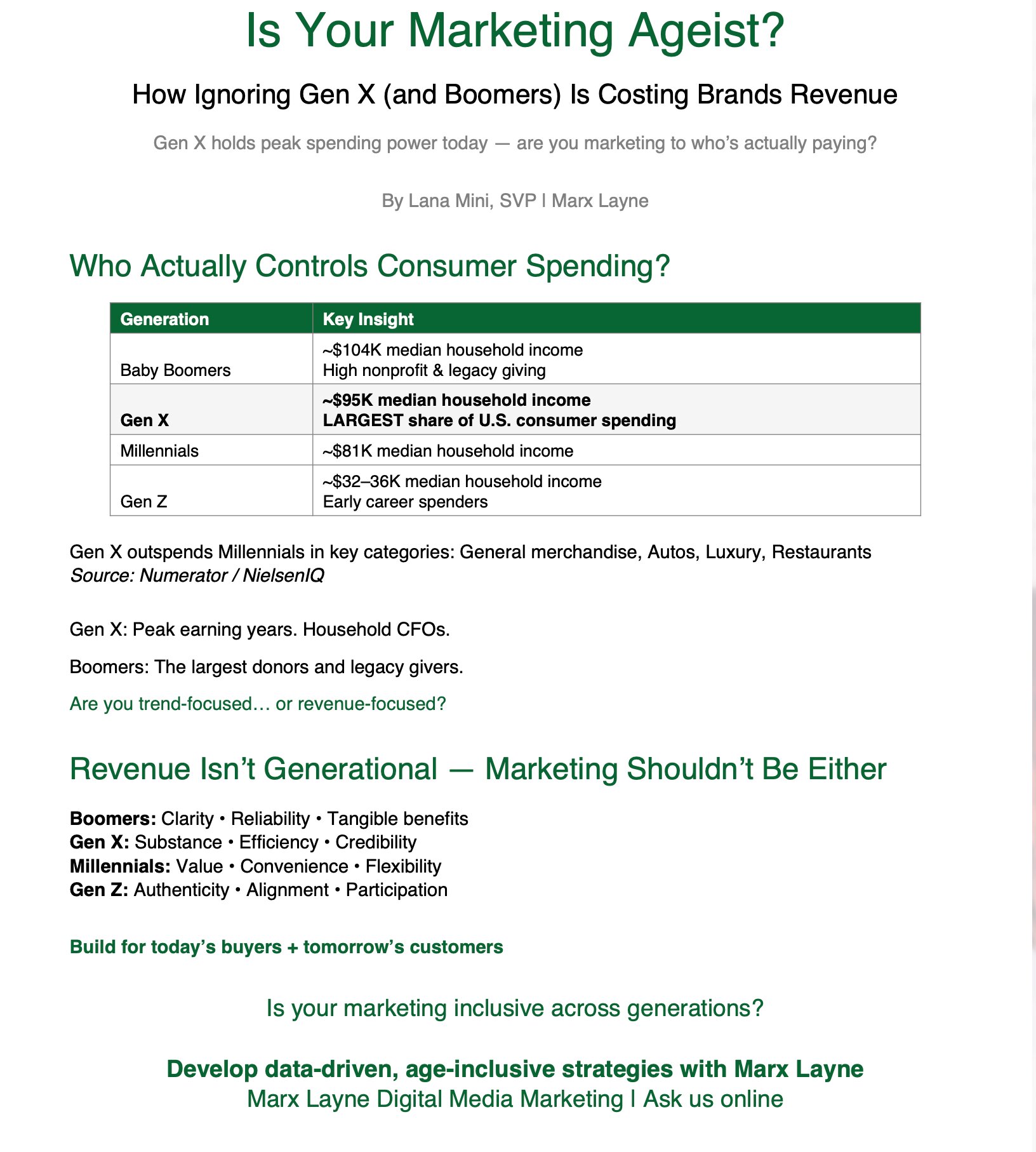
Gen X is quietly running the show on spending.
Born roughly 1965–1980, they're in their peak earning years—handling mortgages, kids' tuition, healthcare, and often caring for aging parents. They're the household decision-makers calling the shots on big purchases: homes, cars, dining out, professional services, even philanthropy.
Recent data backs this up. In 2025, Gen X is projected to drive about $15.2 trillion in global consumer spending—more than any other generation right now. If they were a country, they'd rank as the world's second-largest consumer market. In the US, Gen X households lead in categories like general merchandise, quick-service restaurants, and local dining, often outspending Millennials and Gen Z per household.
Boomers still hold massive wealth and give the most overall to nonprofits (often through planned giving and legacy gifts), but Gen X edges out in per-person donations in many reports and dominates everyday consumer categories.
Gen Z? They're hugely important—they set trends, push platforms forward, and pour money into experiences, tech, and values-aligned brands (sustainability, authenticity, transparency). But they're not yet the biggest spenders. Their share of US consumer dollars has grown (from about 2.6% in 2020 to around 6% in 2025), yet Gen X holds steady at roughly a third of total spend in key areas.
The real issue isn't marketing to Gen Z—it's marketing only to them.
Quick reality check for your brand
Ask yourself:
If the answer is yes to most, your messaging might unintentionally say: "This isn't for Gen X (or even older Millennials)." That's not clever targeting—it's leaving money on the table.
The smart play: Market to today and tomorrow
The best brands don't pick sides—they build layers.
This doesn't require separate brands or confusing identities. It means thoughtful choices:
Gen X doesn't want to be talked down to. Gen Z wants brands that feel genuine, not performative. Everyone wants relevance.
Bottom line
Spending power shifts with life stage. Cultural influence shifts with youth. Trust builds with consistency.
Chasing only what's buzzing today while ignoring who's paying the bills is short-sighted. Dismissing tomorrow's buyers because they're not topping spreadsheets yet is just as risky.
The brands that win long-term build bridges between generations. They stay relevant now—in 2026 and well beyond—by remembering that great marketing isn't about age. It's about understanding who matters today and who will tomorrow.
If your team or strategy isn't reflecting that mix, it might be time for a refresh.
Learn more about Marx Layne PR & Digital Media
Share This Story, Choose Your Platform!
Marx Layne is your competitive advantage.
Your reputation and success are our only concerns.